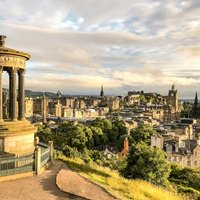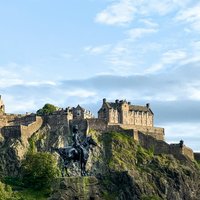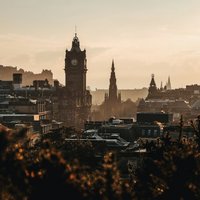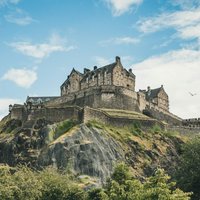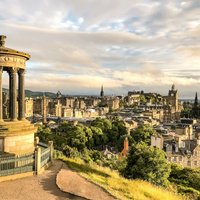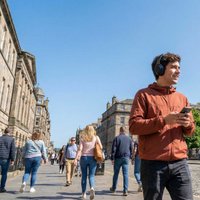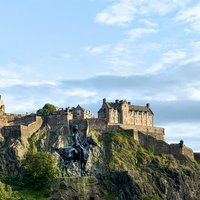

Edinburgh’s Old Town was built vertically on a narrow ridge, with the castle at one end and Holyrood at the other. When the city grew, it grew upward rather than outward – the tenements rose to ten, twelve, fourteen stories, which made them among the tallest residential buildings in the world in the sixteenth and seventeenth centuries. What this vertical growth created, over time, was a city built on top of itself, with older streets sealed off and built over, creating the underground city that Edinburgh now trades on as tourist attraction and that remains genuinely extraordinary as history.
Mary King’s Close
Mary King’s Close is the most accessible and best-documented example. The close ran from the Royal Mile down the northern slope of the ridge and was a complete street – houses, shops, a church – that was sealed off in the early eighteenth century when the Royal Exchange (now the City Chambers) was built over it. The street did not disappear. It became the foundation of the new building above, preserved beneath the floors of the City Chambers in a state that ranges from atmospheric to eerie. The Real Mary King’s Close now runs guided tours through the preserved sections and the experience is genuinely remarkable – you walk through rooms that have been sealed since the 1700s, with their original painted plaster and the physical evidence of the people who lived in them still present in the stonework.
The Plague
Edinburgh’s relationship with plague was intimate and repeated. The city suffered outbreaks in 1568, 1585 and 1645, with the latter particularly severe. The cramped conditions of the Old Town tenements, the lack of sanitation and the density of population created ideal plague conditions. The folk history that Mary King’s Close was sealed off with plague victims inside it is not supported by historical evidence – the close continued to be used after the 1645 outbreak – but the association of underground Edinburgh with plague death is not accidental. The South Bridge Vaults, built in the 1780s, were used initially for storage and workshops and then, as conditions deteriorated, by the city’s poorest people as informal housing. They are genuinely grim.
Burke and Hare
The body snatchers are Edinburgh’s most persistent historical horror. William Burke and William Hare operated from a lodging house in West Port in 1827-28, murdering sixteen people whose bodies they sold to the Edinburgh anatomy school run by Dr Robert Knox. The demand for bodies came from the legitimate requirements of medical education – cadavers for dissection – and the inadequate legal supply of bodies meant that a black market flourished. Burke and Hare’s murders were the extreme end of a widespread trade. Burke was convicted (Hare turned King’s evidence and escaped prosecution), publicly hanged in January 1829 in front of a crowd of 25,000 people, and his skin was subsequently used to make a pocket book that is now in a Edinburgh museum. Edinburgh history does not soften its endings.
The Grassmarket Executions
The Grassmarket was Edinburgh’s main public execution site for centuries. The gallows stood at the east end of the square. The Covenanters – Protestant dissenters executed during the Restoration period – are commemorated by a monument in the square. Maggie Dickson, hanged in 1724, survived her own execution when she revived in her coffin on the way to burial and went on to live another thirty years, becoming known as Half-Hangit Maggie. The pub on the Grassmarket named after her is enjoying that story to this day.
Corrections
Spotted something wrong? Send a correction.