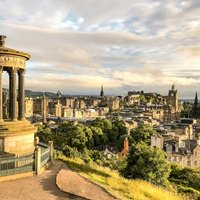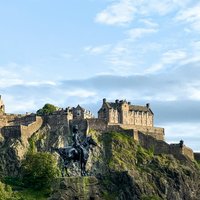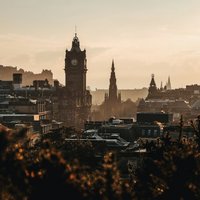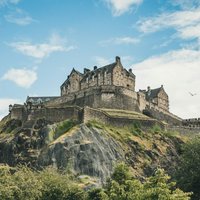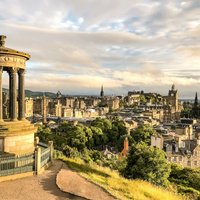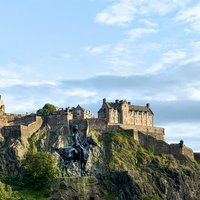

The Edinburgh International Festival was the idea of Rudolf Bing, then general manager of Glyndebourne Opera, who proposed in 1945 that a major international arts festival could be established in a European city as a statement of cultural renewal in the aftermath of the war. Edinburgh was chosen over other candidates including Oxford and Lausanne, primarily on the grounds of its existing infrastructure – the Usher Hall, the King’s Theatre, the Church of Scotland’s General Assembly Hall – and its civic ambitions.
The first Edinburgh International Festival was held in August 1947. The programme was formally curated: invited companies from Britain and Europe performing opera, classical music, theatre and dance in the main venues. It was prestigious, well-funded and exactly what it was designed to be.
Eight theatre companies also performed that week without invitations, in venues they had found themselves, promoting their own shows without the festival’s endorsement. They were from the Theatre Workshop, Glasgow Unity Theatre, Pilgrim Players and other companies that had not been selected for the official programme. They performed in church halls and minor theatres. This was the Fringe, though it did not have that name until 1948, when journalist Robert Kemp wrote that he had found performances “on the fringe of the official festival.”
The Structural Split
The distinction between the Festival and the Fringe is structural and philosophical. The International Festival is curated: the artistic director selects the programme, invites companies, controls quality. The Fringe is open: any performer who can book a venue and pay the registration fee can perform. There is no selection, no quality threshold, no editorial control. The Fringe Society, established in 1959, provides administration and coordination but not curation.
This means the Fringe is simultaneously the largest arts festival in the world and one of the most artistically uneven. In August 2023 the Fringe registered over 3,500 shows across more than 300 venues. The vast majority are seen by very few people. A small number are genuinely significant – career-making for comedians, world premieres of plays that transfer to major theatres, performances that define a moment in a performer’s development. The ratio of good to poor work is low. The absolute quantity of good work is high.
What Fringe Means Now
The contemporary Fringe is primarily understood as a comedy festival, though this is a distortion of its actual composition. Comedy represents approximately a third of the programme. Theatre, dance, physical performance, children’s shows and events make up the rest. The comedy perception persists because comedians have the most aggressive marketing operations, because the comedy critics’ reviews are reproduced in national media, and because the Fringe has produced more nationally significant comedy careers than any other single event in British entertainment.
The economics of performing at the Fringe are punishing. Performers typically pay for venue hire through a box office percentage that can run to 30 or 40 per cent of ticket income. Accommodation in Edinburgh in August is expensive. Marketing costs are substantial. Most performers lose money, or break even at best. The Fringe operates as an audition process for the entertainment industry disguised as a festival, which is not exactly what the eight uninvited companies in 1947 had in mind but is what it has become.
August in Edinburgh
Edinburgh in August is a different city from Edinburgh in any other month. The population roughly doubles. The streets of the Old Town – the Royal Mile, the Grassmarket, the Cowgate – are permanently crowded from mid-morning to late night. Flyerers thrust leaflets at pedestrians on every corner. The Pleasance, the Assembly Rooms, the Traverse, the Gilded Balloon are running shows from 10am to midnight. The city’s restaurant and bar economy operates at a scale it never approaches in other months.
Whether Edinburgh in August is enjoyable depends entirely on whether you are there for the shows. If you are going to several shows a day and using the city as a backdrop for an intense period of cultural consumption, August in Edinburgh is one of the best things Britain offers. If you are trying to cross the Royal Mile in a hurry, it is something else entirely.
Corrections
Spotted something wrong? Send a correction.