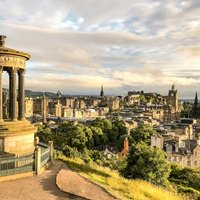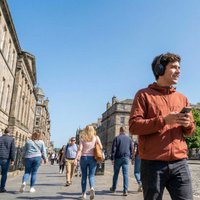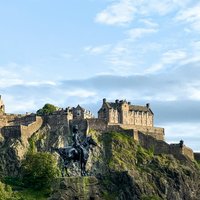

In August 1947, eight theatre companies arrived in Edinburgh without invitations. They had heard about the inaugural Edinburgh International Festival – a curated, prestigious event designed to revive European culture in the aftermath of war – and they decided to perform anyway, in church halls and on street corners, alongside the official programme but entirely outside it. Nobody called it the Fringe then. That word came later, from a newspaper review that described the performances happening “on the fringe of the official festival.” The description stuck and what it named became the largest arts festival in the world.
The Origin Story
The Edinburgh International Festival was founded in 1947 by Rudolf Bing, with the explicit aim of creating a post-war cultural gathering of the highest quality. Edinburgh was chosen partly for its physical beauty, partly for its existing theatre infrastructure, and partly because of a connection between the city’s Lord Provost and those planning the event. The uninvited eight companies of 1947 – including a group from Glasgow Unity Theatre and companies from England and Germany – established the principle that would define the Fringe: no audition, no selection, no gatekeeping. If you could find a venue and an audience, you could perform.
The Scale Question
The Edinburgh Festival Fringe is now almost incomprehensibly large. Over 3,800 shows were registered in 2019. The venues range from the Usher Hall’s 2,200-seat capacity to pub back rooms holding thirty people. The economic impact on Edinburgh in August has been calculated at over £300 million. The city’s population doubles. The accommodation stock is entirely insufficient. Restaurants are booked out weeks in advance. The price of a flat in Edinburgh in August is a different number from September.
The Value Debate
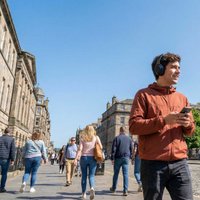
Is the Fringe good for Edinburgh? Residents have always had a complicated relationship with the answer. August in Edinburgh involves navigating a city that has been temporarily occupied by a combination of tourists, performers, arts industry professionals and general visitors who have heard about the thing and want to see it. The locals who love it understand that it is simultaneously Edinburgh’s greatest asset and its most exhausting month. The debate about whether the Fringe has become too large, too commercial, too expensive for new performers to participate in without significant financial risk, is a continuous one that predates most of its participants.
The Performer’s Edinburgh
For the performers – the comedians, theatre makers, dancers, musicians and everything else who make up the Fringe’s programming – Edinburgh in August is a sustained experience of intensity that few other professional situations replicate. You perform every day for a month. You flyer on the Royal Mile at noon and perform at 6pm and then see other shows at 9pm and have a drink at midnight with people who have done the same. The stories that come out of Edinburgh August – the breakthrough show, the empty room, the five-star review that arrives on day twenty-five – accumulate into a mythology that keeps new performers arriving every year despite the costs and the difficulty.
The Future
The Fringe faces genuine structural questions. The cost of a Fringe run – venue fees, accommodation, production – has risen to the point where the financial risk for new performers is serious. The free fringe alternatives organised by PBH and Laughing Horse provide a parallel pathway. The Fringe Society, which administers the event, has been working through the post-pandemic recovery with the knowledge that the event’s survival depends on remaining open to new work rather than consolidating around established names who can afford the costs. The 1947 principle – if you can find a venue and an audience, you can perform – is worth defending.
Corrections
Spotted something wrong? Send a correction.