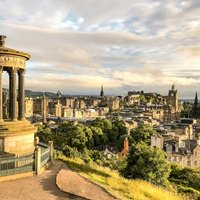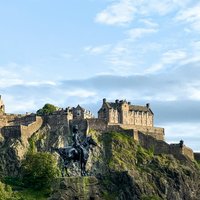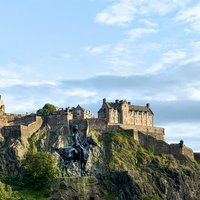

Edinburgh in the mid-eighteenth century was a city under considerable pressure. The medieval Old Town, built on the ridge running from Edinburgh Castle to Holyrood, was one of the most densely populated urban environments in Europe. The tenements – the “lands” that rose in some cases to twelve or fourteen storeys above the closes – housed aristocrats, lawyers, merchants, tradespeople and the very poor in vertical proximity, the wealthy on the middle floors, the poor at the top and bottom. By the 1750s the city’s intellectual elite was arguing that Edinburgh could not fulfil its Enlightenment ambitions while its professional classes lived in medieval squalor.
The proposal for a new town to the north was made formally to Edinburgh Town Council in 1752, in a document titled “Proposals for carrying on certain Public Works in the City of Edinburgh.” The document was written by Patrick Lindsay and subsequently promoted by Lord Provost George Drummond, who became the principal political driver of the project. The idea was to extend the city across the Nor’Loch – the fetid loch that separated the Old Town ridge from the rising ground to the north – by draining the loch and building a bridge across it.
James Craig’s Competition Win
A competition for the plan of the New Town was announced in 1766. The winner was James Craig, a 22-year-old Edinburgh architect who was the nephew of the poet James Thomson. Craig’s winning design was a grid plan: three main streets running east-west parallel to each other, connected by two squares at either end (St Andrew Square to the east, Charlotte Square to the west), with a subsidiary street to the north and a formal garden running along the southern edge overlooking the drained Nor’Loch.
The plan was elegant and uncompromising in its geometry. The three main streets were named after the royal family: George Street for the king, Queen Street for the queen, Princes Street for the princes. The squares were named for the patron saints of Scotland and England respectively. The symbolism of the naming was consistent with the Act of Union of 1707 that had merged Scotland and England; the New Town was conceived in part as a physical expression of Edinburgh’s place in a unified British state.
The Building of It
Construction began in the 1760s and continued over the following decades. The New Town that exists today is substantially larger than Craig’s original plan: a series of extensions to the north and east, designed by various architects, expanded the initial grid into a network of terraces, crescents and streets that covers a large area between the original first New Town and the Water of Leith. Robert Adam designed the north side of Charlotte Square in 1791, which is widely considered the finest single piece of street architecture in Edinburgh.
The building of the New Town involved significant engineering works. The North Bridge was built across the valley of the Nor’Loch to connect the Old Town with the New; it was rebuilt in its current form in the 1890s. The Mound – the artificial hill of excavated earth connecting the Old Town and the New Town – was formed from the spoil of the New Town’s own construction, dumped into the valley over several decades and eventually surfaced as a thoroughfare.
The World Heritage Site
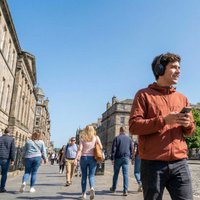
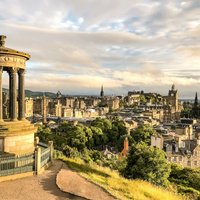
Edinburgh’s Old and New Towns were jointly designated a UNESCO World Heritage Site in 1995, recognised as an exceptional example of two contrasting urban environments – the organic medieval city and the planned Georgian extension – existing in direct adjacency. The New Town is considered the finest surviving example of an eighteenth-century planned urban extension in Britain and one of the finest in Europe. It is also, as a practical matter, a highly functioning residential and commercial district that has been occupied continuously since the 1770s. The Georgian terraces on Heriot Row, Moray Place and the surrounding streets are among the most desirable addresses in Edinburgh. Craig died in 1795, having never repeated the success of his competition-winning plan. He is buried in Greyfriars Kirkyard.
Corrections
Spotted something wrong? Send a correction.