
Mary Stuart returned to Scotland from France in August 1561, arriving at the port of Leith to take up her throne as Queen of Scots. She was 18 years old, recently widowed – her first husband Francis II of France had died the previous year – Catholic, French in manners and culture, educated in the French court, and politically Catholic at a moment when Scotland’s Reformation was less than two years old. The conditions for conflict were structural before she had done anything to create them.
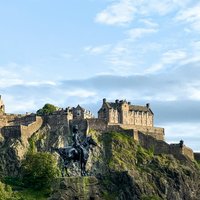
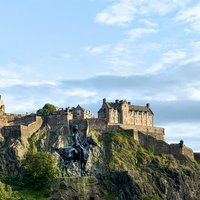
She took up residence at the Palace of Holyroodhouse, at the foot of the Royal Mile below Edinburgh Castle, which became the primary Edinburgh setting for the six years of her Scottish reign. The palace’s apartments – the Outer Chamber, the Bedchamber, the smaller supper room that connects them – are still identifiable, and the supper room is the setting for the most famous episode of her Scottish years.
John Knox
John Knox had returned to Scotland from Geneva in 1559 to lead the Reformation. He was 46 when Mary arrived and had already delivered the sermons that shook the Scottish church from its Catholic foundations. His view of a Catholic queen ruling a Protestant people was expressed with a directness that contemporaries found extreme: he had written the First Blast of the Trumpet Against the Monstrous Regiment of Women in 1558, arguing that female rule was contrary to divine order.
The confrontations between Mary and Knox at Holyrood – of which there were several, conducted with varying degrees of civility – are among the most vivid documented encounters between a monarch and a reformer in the Scottish record. Knox’s own account, in his History of the Reformation in Scotland, presents him as unwavering and Mary as frequently in tears. Mary’s partisans presented the encounters differently. The truth of the dynamic is somewhere between the two accounts, but the basic fact of a young queen and a 46-year-old preacher arguing about God and authority in a palace room in Edinburgh is not disputed.
Darnley and the Supper Room
Mary’s second marriage, to her cousin Henry Stuart, Lord Darnley, in July 1565, was a political and personal disaster. Darnley was vain, unstable and resented Mary’s secretary David Rizzio, whom he suspected of excessive influence. On the night of 9 March 1566, Darnley and a group of Protestant nobles broke into Mary’s supper room at Holyrood while she was dining with Rizzio and a small party. Rizzio was dragged from the room, stabbed 56 times and thrown down the stairs. Mary was pregnant with the future James VI at the time. She never forgave Darnley.
Darnley died in February 1567 in an explosion at the Kirk o’Field house on the outskirts of Edinburgh, where he had been convalescing from illness. Whether he died in the explosion or was strangled beforehand and the explosion was staged remains genuinely uncertain. Mary’s subsequent marriage to James Hepburn, Earl of Bothwell – widely suspected of organising Darnley’s murder – was the political error that ended her reign. Scottish Protestant nobles forced her to abdicate in July 1567.
Imprisonment and Execution
Mary escaped from Lochleven Castle in 1568, raised an army, was defeated at the Battle of Langside, and fled south to England, where she threw herself on the mercy of her cousin Elizabeth I. Elizabeth imprisoned her for nineteen years. The imprisonment ended with Mary’s execution at Fotheringhay Castle in Northamptonshire in February 1587. She was 44.
The supper room at Holyrood is open to visitors as part of the palace tour. The dark stain on the floorboards that guides point to as Rizzio’s blood is not, in fact, Rizzio’s blood. It is a Victorian-era deposit of uncertain origin that acquired the identification over time. The room itself, with its low ceiling and intimate dimensions, does not require the embellishment.
Corrections
Spotted something wrong? Send a correction.